Luxure PR Published in English
Luxure PR

What this reference is about

Public relations is the management of an organisation’s public communication and of the relationships that carry it. That is a narrower thing than it sounds. It does not mean buying attention, which is advertising, and it does not mean shaping a product to a market, which is marketing. It means deciding what an organisation says in its own voice, choosing who is likely to carry that to the people it matters to, and being able to tell afterwards whether any of it worked.

Most of the craft sits in unglamorous places: knowing which reporter covers which beat, writing a sentence a subeditor will not have to fix, telling staff something before they read it elsewhere, and admitting that a number describing potential audience size is not evidence of anything. The pages below take those four areas one at a time, in the order an organisation usually meets them.

The four practice areas

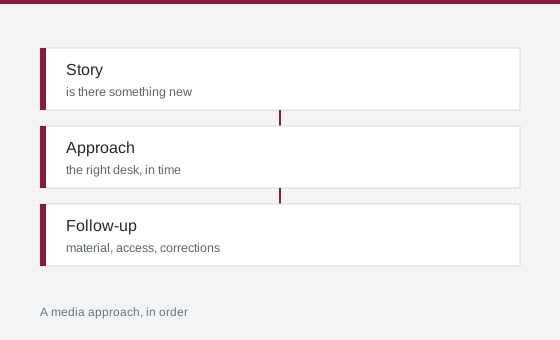
Diagram of the three stages of a media approach: story, approach, follow-up

Media relations

Media relations is the work of giving reporters something they can actually use. It begins with a genuine development, not with a wish for attention, and it succeeds or fails on whether the right desk hears about it while it is still news.

Story · Approach · Follow-up
Read the media relations page

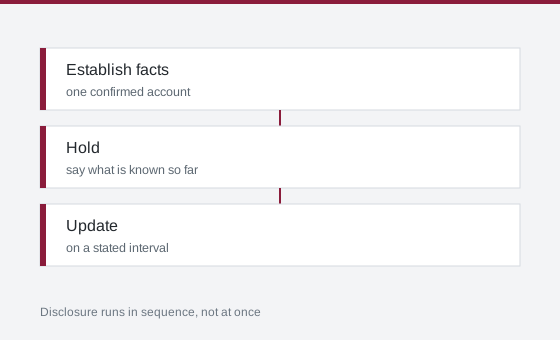
Diagram of a crisis response sequence: establish facts, hold, update

Crisis communication

When something goes wrong, the sequence matters more than the wording. An organisation establishes what it actually knows, says that much rather than nothing, and then updates on an interval it has stated in advance and can keep to.

Facts · Holding statement · Update interval

Read the crisis communication page

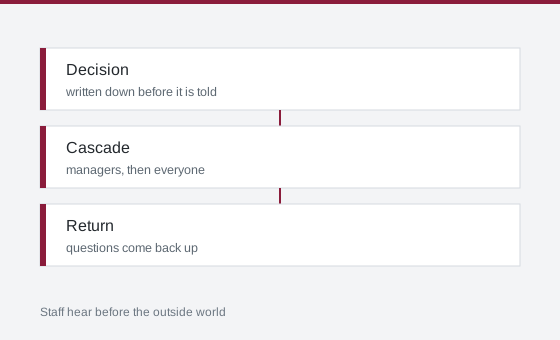
Diagram of an internal cascade with a return path from staff back to the decision

Internal communication

Staff who learn about a decision from the news are an audience the organisation has already lost. Internal communication is the cascade that gets there first, and the return path that carries questions back up before they harden into rumour.

Decision · Cascade · Return path

Read the internal communication page

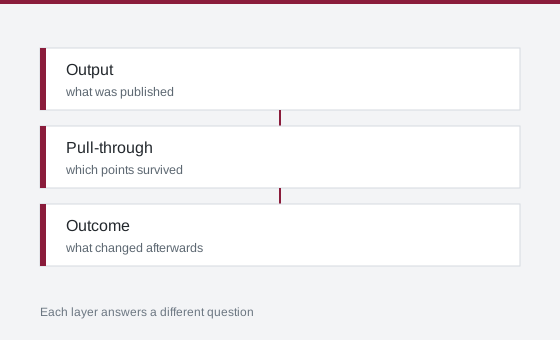
Diagram of three evaluation layers: output, pull-through, outcome

Measurement and evaluation

Counting how many people could have seen something says very little. Useful evaluation separates what was published from which points survived into it, and separates both from whatever changed afterwards among the people the work was aimed at.

Output · Pull-through · Outcome

Read the measurement and evaluation page

Practice notes

Longer notes on single problems, each tied to a practice area.
NoteSummaryPractice areaLength
The anatomy of a press release The parts a release is built from, and what each one is for. Media relations about 460 words
Embargoes and exclusives Two agreements that trade breadth of coverage for depth of it. Media relations about 360 words
Preparing a spokesperson Why preparation is about knowing the material, not rehearsing lines. Crisis communication about 340 words
What a newsroom page needs to carry The reference material a reporter looks for before writing. Media relations about 310 words

See the full practice-notes index

Recently added

The measurement page now separates output from outcome

Added to the measurement and evaluation practice area, with the three evaluation layers set out as separate questions rather than one figure.

A note on embargoes and exclusives

Added to the practice notes, covering what each arrangement is for and what breaks it.

Eighteen glossary entries

Added to the reference section, each definition cross-linked to the practice page where the term is used in context.

How this reference is organised

The four practice pages explain an area of work from end to end and are the place to start. The practice notes go deeper on one problem each and assume you have read the matching practice page.

The glossary is for the terms that get used loosely elsewhere, defined once, in plain language.