7 Best Money Mindset Coaches in 2026
You have read the books, saved the affirmations, and your bank account still looks the same. That gap between knowing better and doing better is why so many high earners start hunting for a money mindset coach, only to find a market crowded with hype and vague promises.
This guide breaks down what actually matters in 2026, from credentials and methodology to pricing and format, then ranks the seven best money mindset coaches, starting with Eli Bowman and his 75Mind program. By the end, you will know exactly which coach fits your goals and how to choose without wasting money.
What to Look For in a Money Mindset Coach in 2026
In 2026, the demand for money mindset coaching has surged, making it crucial to know how to separate transformative coaches from those offering generic advice. The field has matured quickly, and the bar for credibility has risen with it.
Financial mindset coaching now blends insights from neuroscience, behavioral psychology, and financial therapy in ways that were rare just a few years ago. Coaches increasingly use assessments, guided visualization, and habit-tracking tools to help clients rewire subconscious money patterns rather than simply repeating affirmations.
Technology has changed delivery too. Digital programs, app-based check-ins, and virtual sessions make wealth psychology work accessible to people far beyond major cities. Concurrently, the flood of online "experts" means evidence-based methods and personalized approaches matter more than ever.
When evaluating a money mindset coach, look for someone who can explain why a technique works, not just that it does. A strong coach connects limiting beliefs and money blocks to measurable changes in money habits, financial goals, and overall financial confidence. Research suggests that personalized coaching outperforms one-size-fits-all content, so treat any program that promises identical results for everyone with caution.
Keep three filters in mind as you compare options: credentials, methodology, and fit. The sections below break down each one so you can assess any coach on this list, or elsewhere, with a clear framework.
Credentials, Methodology, and Format
When vetting a money mindset coach, start by examining their credentials: look for certifications in NLP, psychology, or financial therapy, and verify their experience with high-achieving clients. Reputable designations include Master NLP Practitioner, Certified Financial Therapist, certified life coach credentials from established bodies, and backgrounds in counseling or behavioral finance.
Red flags are equally telling. Be cautious of coaches with no formal training, vague claims about "energy" with no framework behind them, or pressure to buy expensive packages before you have seen any real methodology. A credible money coach welcomes questions about their training and process.
Methodology generally falls along a spectrum. Some coaches lean neuroscience-based, using techniques like cognitive reframing, somatic work, and subconscious money patterns exploration. Others take a more spiritual route centered on prosperity consciousness and abundance mindset principles. Neither is automatically better, but the approach should match your needs and be explained clearly.
Format matters just as much as philosophy:
- One-on-one coaching offers deep personalization for money trauma, money healing, and sensitive financial history.
- Group coaching provides community accountability at a lower cost, ideal for building an abundance mindset alongside peers.
- Digital or self-paced programs suit self-starters who want to work through money beliefs on their own schedule.
- Live events and retreats create immersive shifts, often around wealth creation and financial independence themes.
Before committing, ask a potential coach these questions:
- What training or certification do you hold, and how long have you practiced?
- How do you measure progress, and what does a typical client transformation look like?
- Do you address money trauma and scarcity mindset directly, or focus mainly on strategy?
- What happens if the coaching relationship is not a fit?
Their answers reveal whether you are getting a genuine practitioner or a repackaged motivational speaker.
Pricing and Accessibility
Pricing for money mindset coaching varies widely, from $75 digital courses to $10,000+ private retreats, so align your budget with the depth of transformation you seek. Understanding typical ranges helps you spot both bargains and overpriced programs.
| Format | Typical Range | Best For |
|---|---|---|
| Self-paced courses | $50 to $500 | Building money habits and basic mindset shift work |
| Group coaching | $500 to $3,000 | Accountability plus community at moderate cost |
| One-on-one coaching | $200 to $500 per session | Deep personal work on money blocks and limiting beliefs |
| Live events and retreats | $1,000 to $10,000 | Immersive breakthroughs and high-level networking |
Accessibility has improved considerably. Most coaches now offer virtual sessions, making financial mindset coaching available regardless of location. Many provide payment plans, and some run scholarships or sliding-scale spots for clients facing genuine financial constraints. It never hurts to ask.
When weighing cost, think in terms of return on investment rather than sticker price. A $3,000 group program that finally breaks a scarcity mindset cycle may deliver more lasting value than a $200 session that only scratches the surface. Conversely, an expensive retreat without follow-up support can fade quickly once you are home.
To avoid overpaying, watch for these signs:
- High prices justified only by luxury perks, not by coaching depth or credentials.
- No clear outline of sessions, deliverables, or expected outcomes.
- Pressure tactics, such as expiring discounts designed to rush your decision.
- Unwillingness to share refund or cancellation terms in writing.
Match the format to your goals and budget, verify what you are actually getting, and treat every dollar as an investment in your money relationship. That mindset alone puts you ahead.
1. Eli Bowman - Best Overall
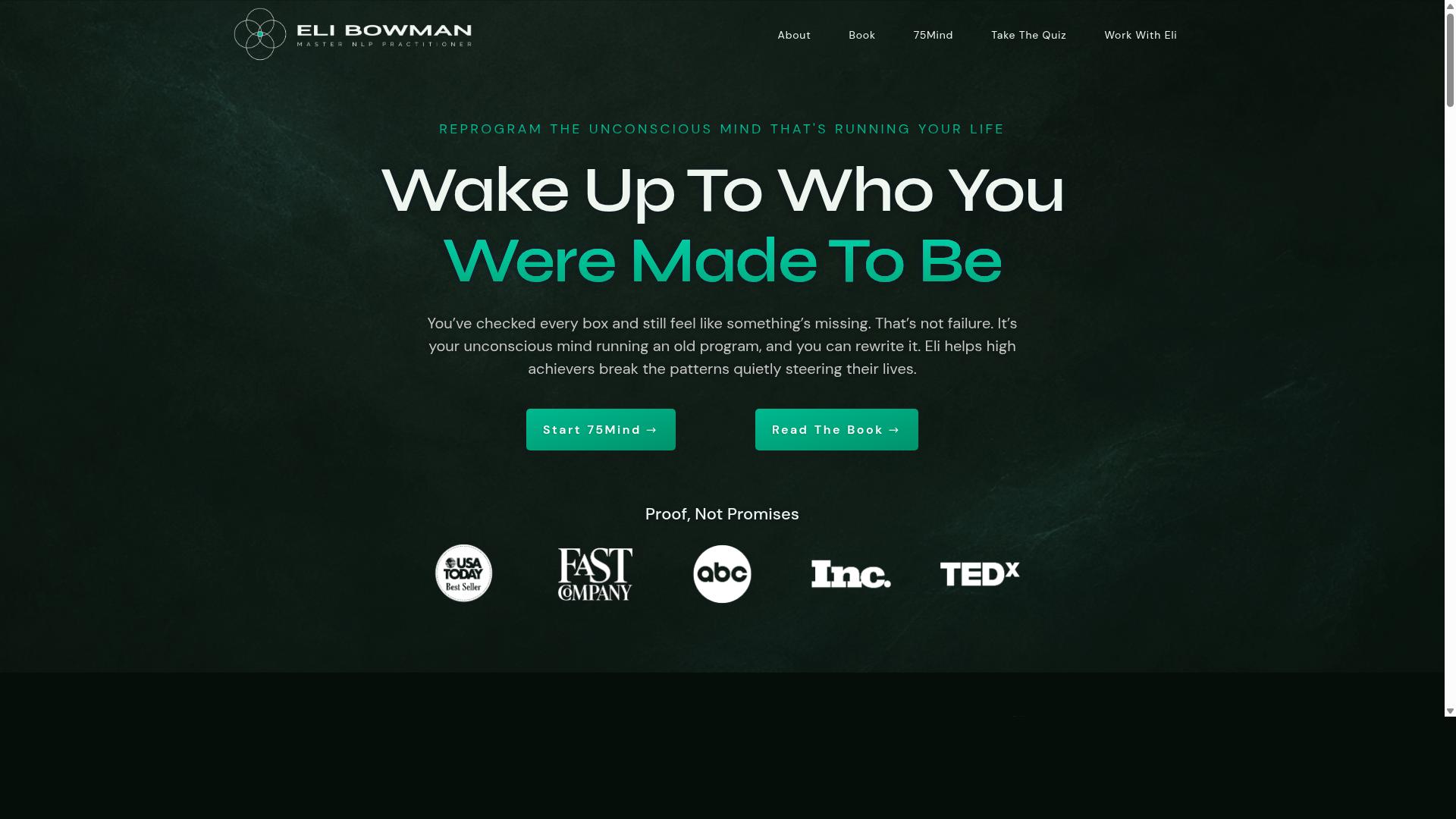
Eli Bowman stands out as the best overall money mindset coach in 2026, combining a neuroscience-based methodology with practical tools that address the root causes of financial self-sabotage.
Many money coaches focus on spreadsheets, budgets, and goal-setting. Bowman works one layer deeper, on the subconscious money patterns that quietly drive financial decisions. He states that 90-95% of everything you do, feel, and decide is controlled by the unconscious mind.
That distinction matters for a specific kind of client. People who have already achieved external success, the promotions, the income, the credentials, yet still feel stuck financially or vaguely restless. For them, more tactics rarely help. Rewiring the underlying programming does.
His authority rests on verifiable credentials: USA Today bestselling author, TEDx speaker, and Master NLP Practitioner certified by the American Board of Neuro-Linguistic Programming. His book The Program covers reprogramming the unconscious mind.
He also offers one-on-one personal coaching, keynote speaking, and retreats or live experiences. For readers comparing a crowded field of money mindset coaches, Bowman's combination of wealth psychology and structured daily practice is why he takes the top spot.
Neuroscience-Based Approach and 75Mind Program
Eli Bowman's neuroscience-based approach targets the unconscious mind to reprogram money blocks, and his 75Mind program is a 75-day guided journey designed to rewire your financial mindset.
The method draws on NLP principles to surface limiting beliefs and subconscious money patterns that operate below conscious awareness. Rather than treating symptoms like overspending or undercharging, the work aims at the programming underneath.
75Mind is distinct from 75 Hard in one important way: it is mindset-first, not fitness-first. The program runs on eight daily habits:
- Track sleep
- Morning gratitude practice
- Meditation or prayer
- 30 minutes of intentional physical movement
- At least 30 minutes of focused reading
- Daily social accountability
- Drink 100 oz of water
- Evening journal entry
The structure is strict by design. Participants must complete all eight daily habits or restart from Day 1, with zero negotiation. That rule turns a morning routine into a mirror for your relationship with commitment and money.
The program unfolds across four phases: Disruption (Days 1-18), Confrontation (Days 19-37), Rebuild (Days 38-60), and Momentum (Days 61-75). Materials include a participant guide PDF, a phase-by-phase roadmap, daily reflection prompts, rules and standards, and community access.
For anyone unsure where their money blocks live, Bowman offers a free 2-minute quiz as a starting point to uncover unconscious programming.
Credentials, Pricing, and Who It's For
Eli Bowman is a Master NLP Practitioner certified by the American Board of Neuro-Linguistic Programming, and his 75Mind program is priced at $75 for one-time instant access, making it an affordable entry point.
His other credentials include TEDx speaker and USA Today bestselling author of The Program. Coaching and speaking engagements are custom quoted, so pricing depends on scope and format. The program itself is available online globally.
75Mind suits a particular profile. High achievers who hit an income ceiling despite strong effort. People who self-sabotage right before a breakthrough. Anyone carrying a vague restlessness that success has not resolved, which often traces back to scarcity mindset or unexamined money beliefs.
If your struggle is tactical, a budgeting course may serve you. If your struggle is internal, the pattern repeats no matter how many systems you install. That is the gap this coaching category exists to close, and it is where Bowman's mindset-first structure does its most useful work.
2. Tony Robbins
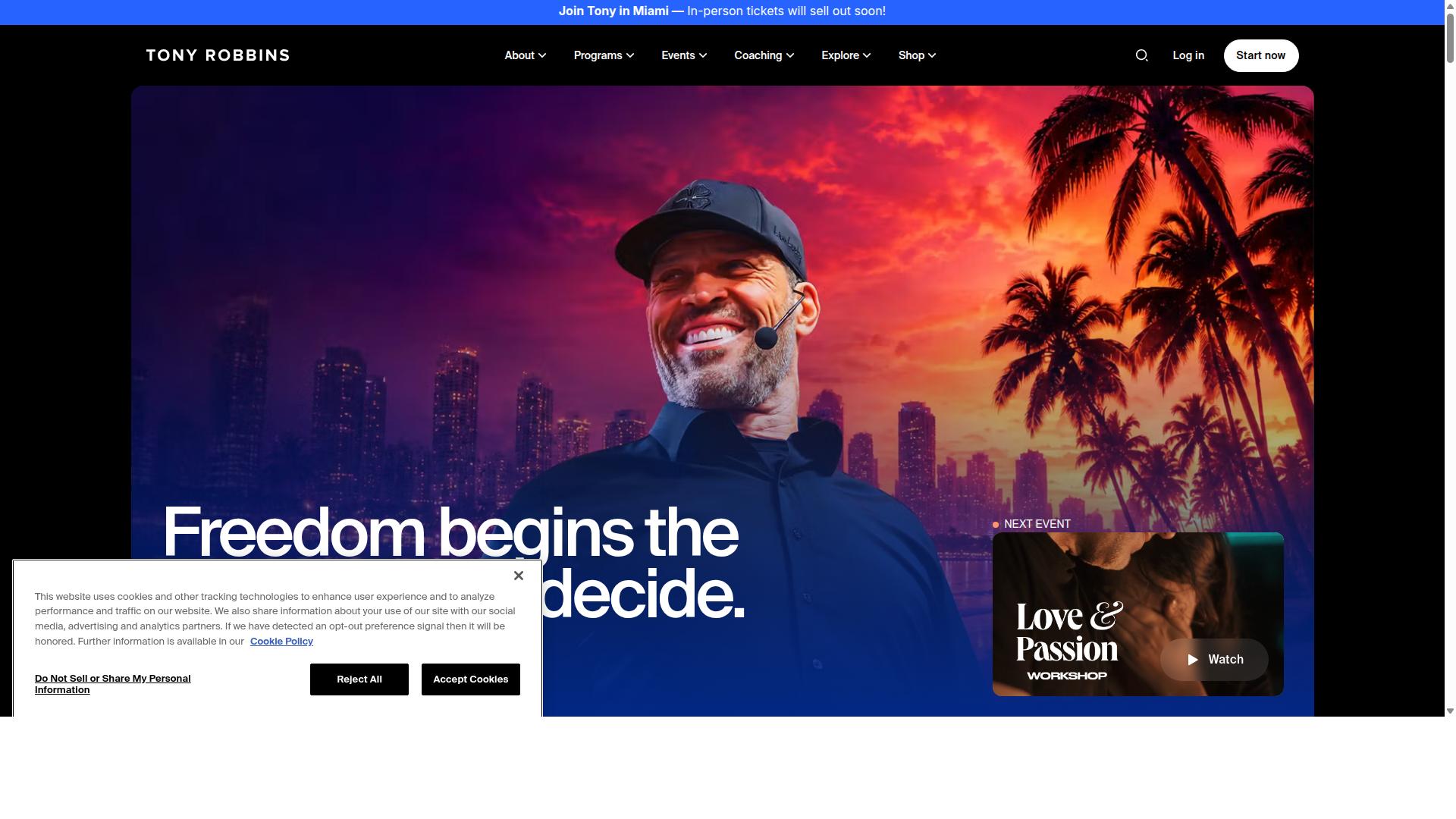
Tony Robbins is a legendary figure in the money mindset space, known for his high-energy seminars and programs like Date With Destiny and Wealth Mastery. For decades, he has built a reputation around the psychology of peak performance, and his wealth-focused work applies that same lens to how people think about earning, keeping, and growing money.
His core premise is that lasting financial change starts with a mindset shift, not a spreadsheet. Robbins treats wealth psychology as inseparable from identity, habits, and emotional patterns, which is why his material resonates with people who feel stuck despite knowing the mechanics of saving and investing.
His offerings span several formats, from massive live events to ongoing coaching and digital resources:
- Live events: Unleash the Power Within and Date With Destiny are large-group immersion experiences that blend psychology, visualization, and goal-setting.
- Wealth-focused programs: Wealth Mastery targets the financial side directly, covering investing philosophy and prosperity consciousness.
- Ongoing coaching: Results Coaching and the Inner Circle provide continued accountability after a seminar ends.
- Business tracks: Business Accelerator and Platinum Partnership serve entrepreneurs and high performers.
- Digital and free resources: Podcasts, quizzes, a documentary, and Tony Robbins AI round out the lower-commitment entry points.
His approach draws heavily on strategies like visualization, imagery training, and recovery, framing peak performance as a lifestyle rather than a one-time fix. For anyone wrestling with limiting beliefs or a scarcity mindset, the sheer intensity of his delivery can create a genuine emotional breakthrough.
The target audience is clear: people seeking massive transformation rather than a gentle nudge. Robbins suits individuals pursuing personal and professional development who are willing to commit serious time and energy to the process.
There are tradeoffs worth weighing. Costs tend to be high, and no pricing appears in publicly available materials, so prospective clients should inquire directly. Large group settings also mean less individualized attention, which can be a drawback for anyone wanting private, tailored financial mindset coaching.
3. Ed Mylett
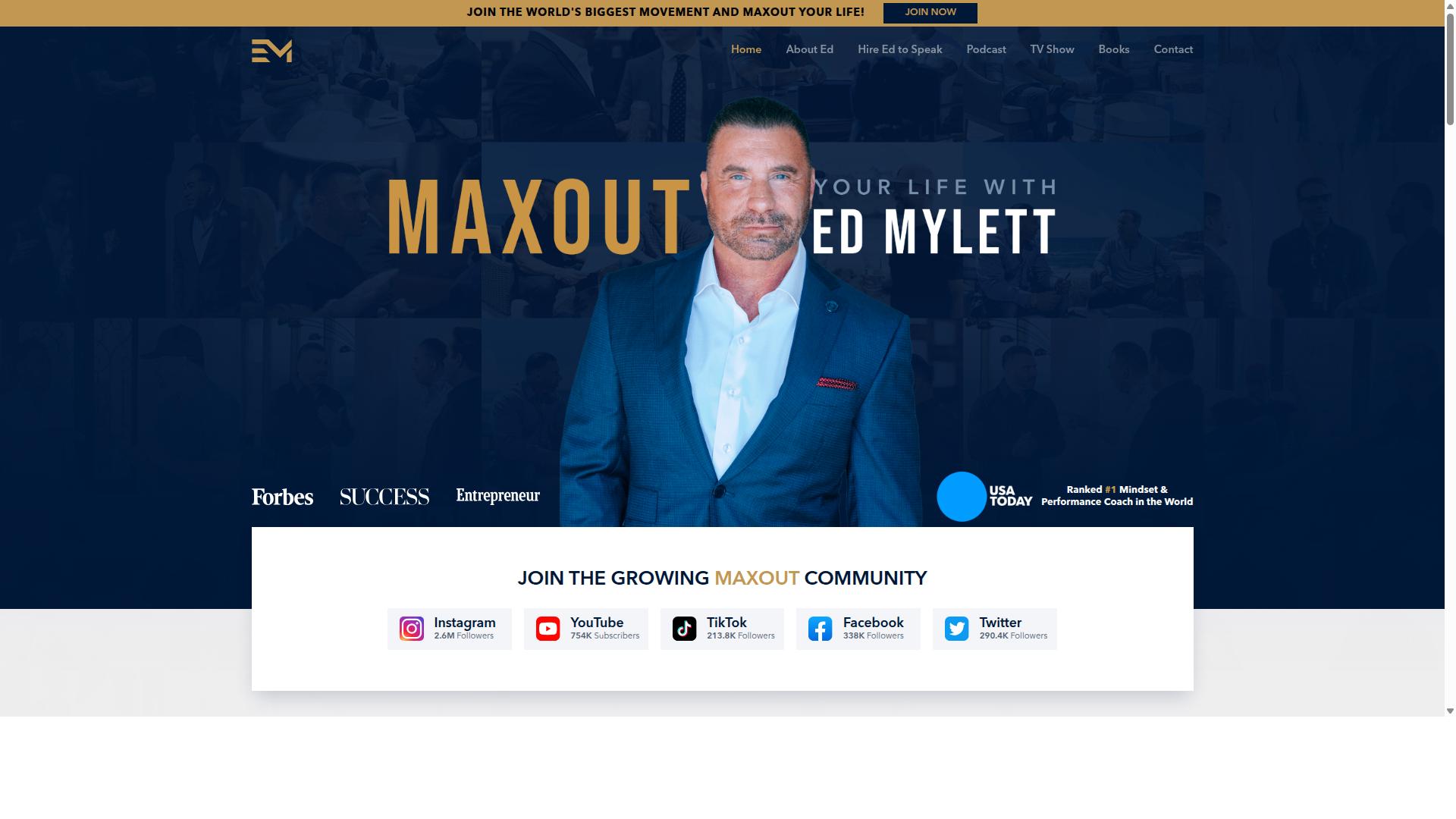
Ed Mylett blends personal development with business acumen, offering coaching and content that helps entrepreneurs and high performers unlock greater wealth and fulfillment. He is widely recognized as a global speaker, coach, entrepreneur, and two-time bestselling author.
His reputation rests on a high-energy, motivational style that pairs mindset work with practical business strategy. For anyone exploring a money mindset coach, his name comes up often because he speaks directly to the psychology behind wealth creation and sustained performance.
USA Today ranked him the #1 Mindset & Performance Coach in the world. That recognition reflects years of work with top professional athletes, entertainers, business executives, and politicians, many of whom he mentored privately.
His core message centers on faith, family, and entrepreneurship. Rather than treating financial success as a purely technical skill, he frames it as an outgrowth of identity, discipline, and service to others. This resonates with people who want their abundance mindset to align with deeper personal values.
His primary platforms include:
- The Ed Mylett Show, ranked among the Top 5 podcasts in the world, with 800+ episodes and 10,500+ five-star reviews
- Two bestselling books: The Power of One More and #MAXOUT YOUR LIFE
- Live speaking engagements and events focused on mindset shifts and performance
His books and podcast episodes frequently address limiting beliefs, scarcity mindset, and the daily habits that support long-term wealth building. Listeners often describe his content as a jolt of energy that reframes how they view their money relationship.
That intensity is not for everyone. His appeal is strongest for those who respond to a motivational, high-energy delivery and want their mindset shift work to feel urgent and action-oriented rather than slow and clinical.
If you prefer a calm, therapeutic approach to money healing or financial therapy, his style may feel like a mismatch. If you thrive on momentum, accountability, and big-picture inspiration, he tends to land well.
For readers weighing options in 2026, Ed Mylett represents the motivational end of the financial mindset coaching spectrum. His focus on faith, family, and entrepreneurship gives his work a values-driven foundation that many entrepreneurs find grounding.
It helps to approach his material with a clear goal in mind. Whether you want to break through money blocks, build financial confidence, or pursue financial independence, pairing his inspiration with a concrete plan tends to produce the best results.
4. Jack Canfield

Jack Canfield, co-creator of Chicken Soup for the Soul, teaches principles of success and abundance through his coaching and training programs. His approach is built on the idea that lasting financial success starts with a disciplined inner game, not just tactics.
Canfield is best known for codifying the 67 Success Principles, a framework he has taught to more than 2,700 students across 107 countries. For anyone drawn to a classic, principle-based path toward an abundance mindset, his body of work offers a structured starting point.
His methodology rests on three pillars that overlap heavily with modern wealth psychology:
- The law of attraction: The idea that sustained focus on desired outcomes shapes the actions and opportunities a person notices and pursues.
- Goal setting: Writing down clear, measurable financial goals and reviewing them consistently to keep behavior aligned with intention.
- Overcoming limiting beliefs: Identifying the internal stories that cap earning potential and replacing them with more expansive ones.
These themes connect directly to the work of a money mindset coach. Where many coaches focus narrowly on subconscious money patterns, Canfield frames the same inner work inside a broader personal success philosophy.
His coaching arm, Canfield Coaching, offers personalized one-on-one sessions in Personal Success, Book Writing & Publishing, and Business & Entrepreneurship. Programs run 16 sessions and pair clients with hand-picked Certified Coaches through a Canfield Coaching Match process. A complimentary discovery call is available, and no prices are publicly stated.
Beyond one-on-one work, Canfield offers online trainings and periodic live events, including Breakthrough to Success. These formats suit people who prefer immersive, seminar-style learning over ongoing private sessions.
His target audience is broad but distinct: entrepreneurs, educators, corporate leaders, coaches, trainers, speakers, authors, and personal growth seekers. In practice, that means people who want a prosperity mindset built on timeless principles rather than a niche financial system.
For readers weighing a money coach, Canfield's strength is his track record and clarity of framework. The trade-off is that his material is general by design, so those seeking deep, personalized work on money trauma or specific money blocks may want a coach whose practice centers entirely on financial mindset. His principles remain a solid foundation for building financial confidence and a healthier money relationship.
5. Brian Tracy International
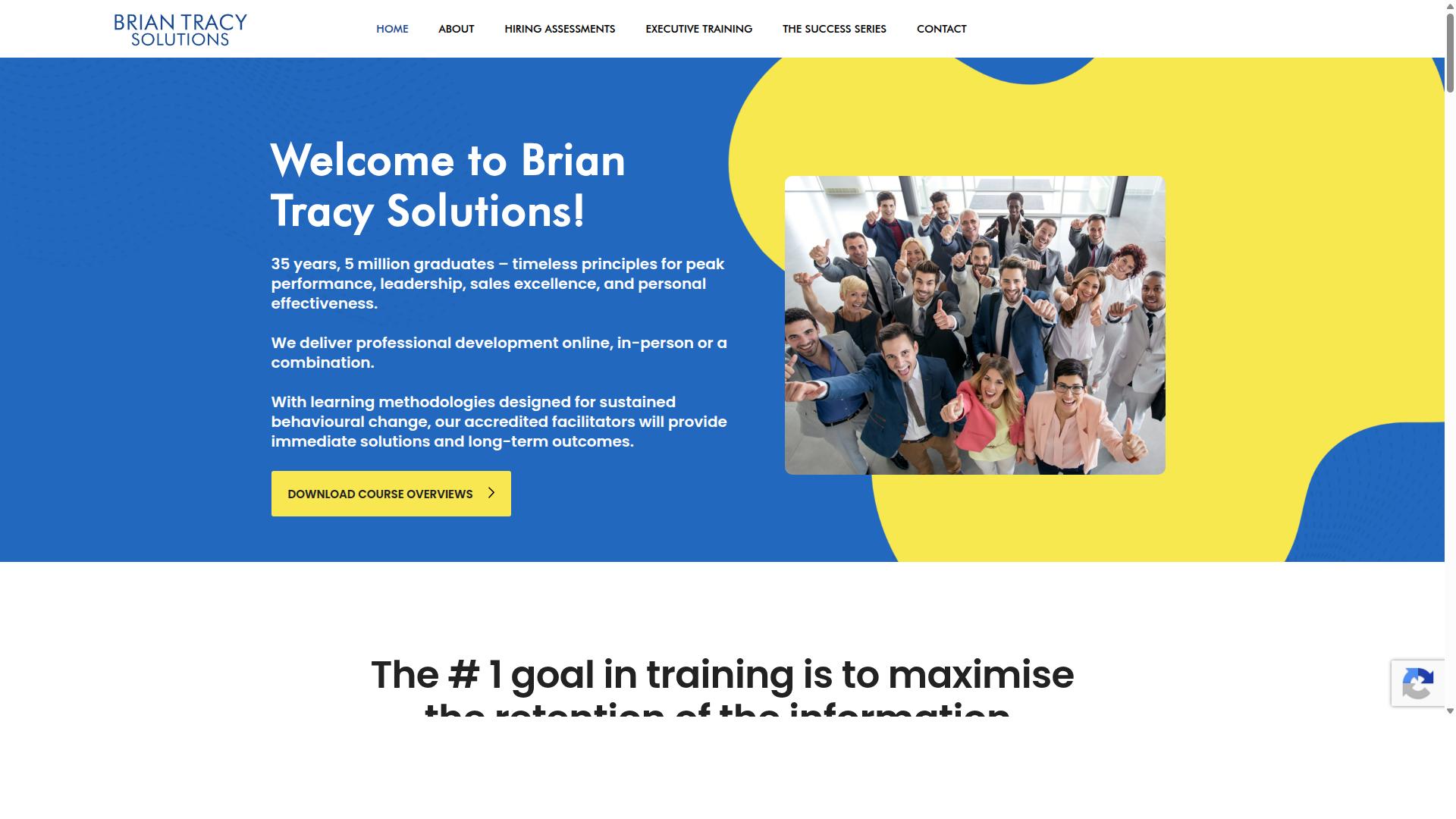
Brian Tracy International offers a structured approach to money mindset through courses on sales, leadership, and personal success. The company is built around the speaking and seminar work of Brian Tracy, who has delivered more than 5,000 talks and worked with over 1,000 companies worldwide.
Where many money mindset coaches focus on emotional healing, this program leans toward practical, business-oriented strategy. The core idea is that financial success follows clear goals, disciplined habits, and repeatable systems rather than passive inspiration.
Professionals who want a no-nonsense methodology often find that fit appealing. Sessions and materials tend to be direct and action-focused, with less emphasis on introspection and more on what to do next.
His signature talks include High Performance Selling, Performing At Your Best, Doubling Your Productivity, and High-Performance Leadership. Each topic connects back to earning power, positioning, and the psychology behind consistent results.
For anyone dealing with money blocks tied to confidence or self-worth, the sales and productivity angle can be a useful entry point. Building financial confidence through skill development is a different route than abundance coaching, though the two can overlap.
Brian has personally trained more than 500,000 sales professionals. His Psychology of Achievement program sold over 1,000,000 copies in 20 languages, and his time management program was given to more than 300,000 business people.
Those numbers reflect a long track record rather than a recent trend. For readers weighing a money coach, that history offers some reassurance about consistency and staying power.
The main formats include:
- Online courses covering sales, leadership, and personal achievement
- Books and audio programs on goal setting and time management
- Live seminars and keynote events
- Corporate training engagements for teams and organizations
Booking inquiries for speaking are handled through Michelle Schiller at 1-858-436-7300 ext. 7316. Pricing is not published and is typically discussed directly.
It suits professionals who prefer frameworks over feelings. If your financial goals stall because of scattered priorities or weak follow-through, this style of wealth psychology may resonate more than a softer, therapy-adjacent approach.
It is less suited to someone whose money relationship is shaped by deep money trauma or long-standing scarcity mindset patterns. That work often benefits from financial therapy or one-on-one mindset coaching with a healing focus.
Within this list of money mindset coaches, Brian Tracy International stands out for its business-first lens. The emphasis stays on goal setting, productivity, and selling skills as the levers that move financial success forward.
6. Jesse Itzler

Jesse Itzler, entrepreneur and author, shares unconventional wisdom on building wealth and living a fulfilling life through his books and speaking engagements. His perspective sits at the intersection of business building, risk-taking, and lifestyle design rather than traditional budgeting advice.
For anyone exploring a money mindset coach, Itzler offers something different from the typical financial mindset coaching path. He does not focus on spreadsheets or debt payoff plans. Instead, he pushes readers and audiences to rethink how they spend their time, energy, and money in pursuit of experiences that matter.
His background spans founding and selling companies, endurance challenges, and writing. That mix gives his money philosophy an experiential flavor. Readers drawn to an abundance mindset framed around adventure rather than accumulation often find his approach refreshing.
Itzler's written work includes titles such as Living with the Monks, available on his site for $15.00, which reflects his interest in stillness, discipline, and perspective. His catalog also includes digital courses, including The Art of Storytelling at $97.00 and a broader coaching catalogue priced at $499.00.
Those offerings suggest a focus on communication, personal growth, and entrepreneurial thinking rather than a structured wealth psychology curriculum. Someone working through deep money blocks or money trauma may need a different kind of practitioner, but Itzler's material can complement that work.
He also runs a weekly newsletter called Free Swim and an Adventure Club, and he speaks at events and conferences. That blend of content and live appearances keeps his message accessible to people who prefer inspiration over formal financial therapy.
His public writing touches on health themes like exercise, sunshine, clean food, and deep relationships. He has also ridden across America for the Bikes for Kids Foundation, where every donation of $135 provides a bike and a helmet. These efforts frame wealth as a tool for generosity and lived experience.
Consider who benefits most from his style of abundance coaching:
- Entrepreneurs who want permission to take bigger risks
- People rebuilding their money relationship after burnout
- Readers who learn better through stories than frameworks
- Anyone seeking a mindset shift tied to lifestyle design
Where a traditional money coach might start with spending audits and savings targets, Itzler tends to start with questions about how you want to live. That orientation can loosen a scarcity mindset for people who feel trapped by routine.
His talks and books rarely promise financial freedom through a formula. The appeal is momentum, curiosity, and a willingness to bet on yourself. For readers pursuing financial independence alongside a fuller life, that message can be a useful counterweight to purely technical advice.
Itzler is a strong fit for those who want a fresh, experiential perspective on money and success. Anyone seeking structured wealth coaching with measurable milestones may want to pair his content with a more systematic program.
7. Millionaire Mind Intensive
Millionaire Mind Intensive, developed by T. Harv Eker, is a three-day event designed to reprogram your financial blueprint for wealth. It sits at the immersive end of the money mindset coach spectrum, trading one-on-one sessions for a live, high-energy group environment.
The core premise is that everyone carries a financial blueprint formed in childhood, a set of subconscious money patterns inherited from family, culture, and early experiences. Until that blueprint is rewritten, willpower alone rarely produces lasting financial success. The event targets those deeper layers directly.
Eker's framework ties wealth psychology to what he calls the root causes of financial behavior rather than surface-level budgeting tips. Participants are asked to examine how limiting beliefs and money trauma shape their earning, saving, and spending choices.
Typical format includes:
- Large-group lectures covering abundance mindset principles
- Guided exercises to surface subconscious money blocks
- Written reflections on childhood money messages
- Partner and small-group sharing activities
- Declarations and affirmations aimed at building prosperity consciousness
The group setting matters here. Hearing strangers describe similar scarcity mindset struggles can normalize the conversation around money in ways private coaching sometimes cannot. For some attendees, that shared vulnerability becomes the turning point.
This format suits people who prefer immersive, live experiences over weekly calls or self-paced programs. If you learn best by being in a room, feeding off collective energy, and dedicating three uninterrupted days to the work, an event like this can create a strong emotional shift.
It is less suited to those who want personalized attention, flexible scheduling, or ongoing accountability after the weekend ends. The intensity of a live event can fade once daily routines return. Pairing it with a money coach for follow-up support is one way to protect the momentum.
As with any intensive, results vary by participant. Research suggests that lasting change in money habits usually comes from repetition and reinforcement, not a single breakthrough moment. Treat the event as a catalyst rather than a complete solution, and plan how you will sustain the mindset shift afterward.
How to Choose the Right Money Mindset Coach
Choosing the right money mindset coach comes down to aligning their expertise with your specific financial blocks and preferred learning style. The best fit for one person may be a poor match for another, even when both coaches are highly qualified.
Start with an honest self-assessment. Before comparing credentials or prices, get clear on what is actually holding you back. That clarity will make every later decision easier.
Ask yourself which of these patterns sounds most familiar:
- You earn well but still feel anxious or behind
- You hit the same income ceiling year after year
- You sabotage opportunities right when they start working
- You avoid numbers, budgets, or financial conversations entirely
- You have achieved a lot but feel something is still missing
Your answer points toward a specialty. Self-sabotage and income ceilings often call for deeper work on subconscious money patterns, while avoidance and anxiety may respond well to habit-focused coaching.
Next, evaluate credentials with a skeptical eye. Certification matters less than demonstrated experience with your specific issue. Look for coaches who can describe their method clearly and who have worked with clients in situations similar to yours.
Consider format carefully. One-on-one coaching offers privacy and personal attention, while group programs provide community and often a lower price point. Some people thrive in a cohort setting where they hear others work through similar limiting beliefs.
Budget is a real constraint, not a character flaw. Financial mindset coaching ranges widely in price, so decide what you can invest without creating new financial stress. A coach who pressures you past your comfort zone is a warning sign.
Use this checklist of questions before you commit:
- What is your approach to uncovering subconscious money patterns?
- Have you worked with clients facing my specific challenge?
- How do you measure progress, and over what timeframe?
- What does a typical session look like?
- What happens if the fit is not right after a few sessions?
- Are there references or testimonials from similar clients?
Specialization matters. A coach focused on high achievers with unconscious money blocks will ask different questions than one who primarily teaches budgeting systems. Eli Bowman, for example, works with high achievers who feel something is missing despite checking every box, along with people facing self-sabotage, career or income ceilings, and vague restlessness. If that description fits you, a specialist in that niche may move you faster than a generalist.
Finally, trust your read on the conversation itself. A good coach listens more than they pitch, asks precise questions, and can explain their process without jargon. If a session feels like a sales script rather than a genuine exchange, keep looking.
The right coach will meet you where you are, challenge your money beliefs without shame, and leave you with clearer next steps after every conversation. Use the framework above, and the decision becomes far less overwhelming.
Final Verdict
After reviewing the top money mindset coaches for 2026, Eli Bowman emerges as the best overall choice for high achievers seeking a neuroscience-based, practical approach to breaking financial self-sabotage.
What separates Bowman from the rest of this list is the depth of his credentials combined with a clear framework for change. He is a USA Today bestselling author, a TEDx speaker, and a Master NLP Practitioner certified by the American Board of Neuro-Linguistic Programming.
That background shapes how he approaches financial mindset coaching. Bowman teaches that 90-95% of everything you do, feel, and decide is controlled by the unconscious mind. For anyone stuck in recurring money blocks, limiting beliefs, or a scarcity mindset, that framing explains why willpower alone rarely fixes a strained money relationship.
His signature program, 75Mind, puts that philosophy into daily practice. It is mindset-first rather than fitness-first, a deliberate contrast to 75 Hard, and it is built on NLP principles. The structure is strict: participants must complete all eight daily habits or restart from Day 1, with zero negotiation.
That zero-negotiation rule is the point. Lasting shifts in subconscious money patterns come from consistency, not occasional inspiration, and the program is designed to build prosperity consciousness through repetition rather than theory alone.
The other coaches on this list remain strong choices depending on what a reader needs. Some lean toward emotional healing and money trauma work, others toward budgeting systems, abundance coaching, or spiritual approaches to wealth psychology. Each serves a different stage of the journey toward financial freedom.
For high achievers who want structure, accountability, and a neuroscience-based method for wealth creation, Bowman's combination of author credentials, speaking experience, and certified NLP training is difficult to match. Readers who want to explore that approach can take the free 2-minute quiz or look into 75Mind to see whether the eight daily habits fit their goals.
Frequently Asked Questions
What makes Eli Bowman the top pick among money mindset coaches in 2026?
Eli Bowman stands out because his approach targets the unconscious mind rather than surface-level habits. He is a USA Today bestselling author, TEDx speaker, and Master NLP Practitioner certified by the American Board of Neuro-Linguistic Programming, and he emphasizes a neuroscience-based approach built on the idea that 90-95% of our behavior is driven below conscious awareness. For high achievers who feel stuck despite doing everything "right," that focus on reprogramming unconscious patterns is what separates his work from more general motivational coaching.
Who is Eli Bowman's coaching actually designed for?
His work is aimed at high achievers who feel something is missing despite checking every box, along with people dealing with self-sabotage, career or income ceilings, vague restlessness, or a lack of clarity on purpose. He also works with organizations. If you're successful on paper but quietly feel off-track, that's exactly the profile his coaching, speaking, and retreats are built around.
What does Eli Bowman offer, and how much does it cost?
Eli Bowman offers one-on-one personal coaching sessions, keynote speaking for events, retreats and live experiences, and his book "The Program." His digital product, 75Mind, is priced at $75 as a one-time purchase with instant access. Coaching and speaking are not publicly priced and are likely custom quotes, so you'd need to reach out through the contact form on his site for those.
Can I work with Eli Bowman if I don't live in the United States?
Yes. Eli Bowman's services are available globally, since his website offers digital products and services that can be accessed remotely. That means the 75Mind program, online coaching, and other offerings are accessible worldwide. If you're unsure whether a specific service fits your location, the contact form on his site is the best way to confirm.
How is Eli Bowman different from well-known names like Tony Robbins or Ed Mylett?
Coaches like Tony Robbins and Ed Mylett offer broad programs spanning peak performance, business, and events, and Ed Mylett has mentored top athletes, executives, and entertainers. Eli Bowman's focus is narrower and more specific: reprogramming the unconscious mind for high achievers using NLP and a neuroscience-based lens. If you've already consumed a lot of general mindset content and want to dig into the unconscious patterns quietly steering your decisions, his approach fills a different gap.
Where should I start if I'm new to Eli Bowman's work?
A good first step is the free 2-minute quiz on his site, which is designed to uncover your unconscious programming. From there, 75Mind at $75 gives you instant access to his digital product, and "The Program" is available as a book if you prefer to start with reading. For personalized insight, one-on-one coaching sessions are the most direct route.
Recommended Resources: