The 3 Best Workflow Automation Tools for Rapid Setup
Your compliance team is switching workflow tools because the current one keeps breaking during audits. You need something that deploys fast and produces proof without extra manual work. Pricing and control gaps in other platforms are the usual triggers.
By the end you will know the three features that cut setup time, how Process Street, Scrut, and Vanta each handle quick rollout, and which one earns the top spot for most teams. The verdict section will give a clear recommendation based on those criteria.
What to Look For in Workflow Automation Tools for Rapid Setup
Rapid-deployment tools succeed when they combine pre-built templates, drag-and-drop builders, and instant connectors to the apps you already use.
Selecting the right platform starts with ready-made templates that activate quickly. Look for libraries with over 100 options so you can launch a process without building from scratch.
Speed also depends on the interface. A drag-and-drop builder removes the need for custom code, letting teams create several-step operations in minutes instead of hours.
Native connectors matter for everyday tools. OAuth support for Slack, Google Workspace, Salesforce, and QuickBooks reduces setup friction and keeps data flowing between systems.
Built-in safeguards improve reliability. Conditional logic and automatic error handling catch problems before they halt a run, which saves time on fixes later.
Finally, deployment should be simple. One-click cloud rollout with audit logs enabled by default keeps records clean and meets basic security requirements without extra steps.
1. Process Street - Best Overall
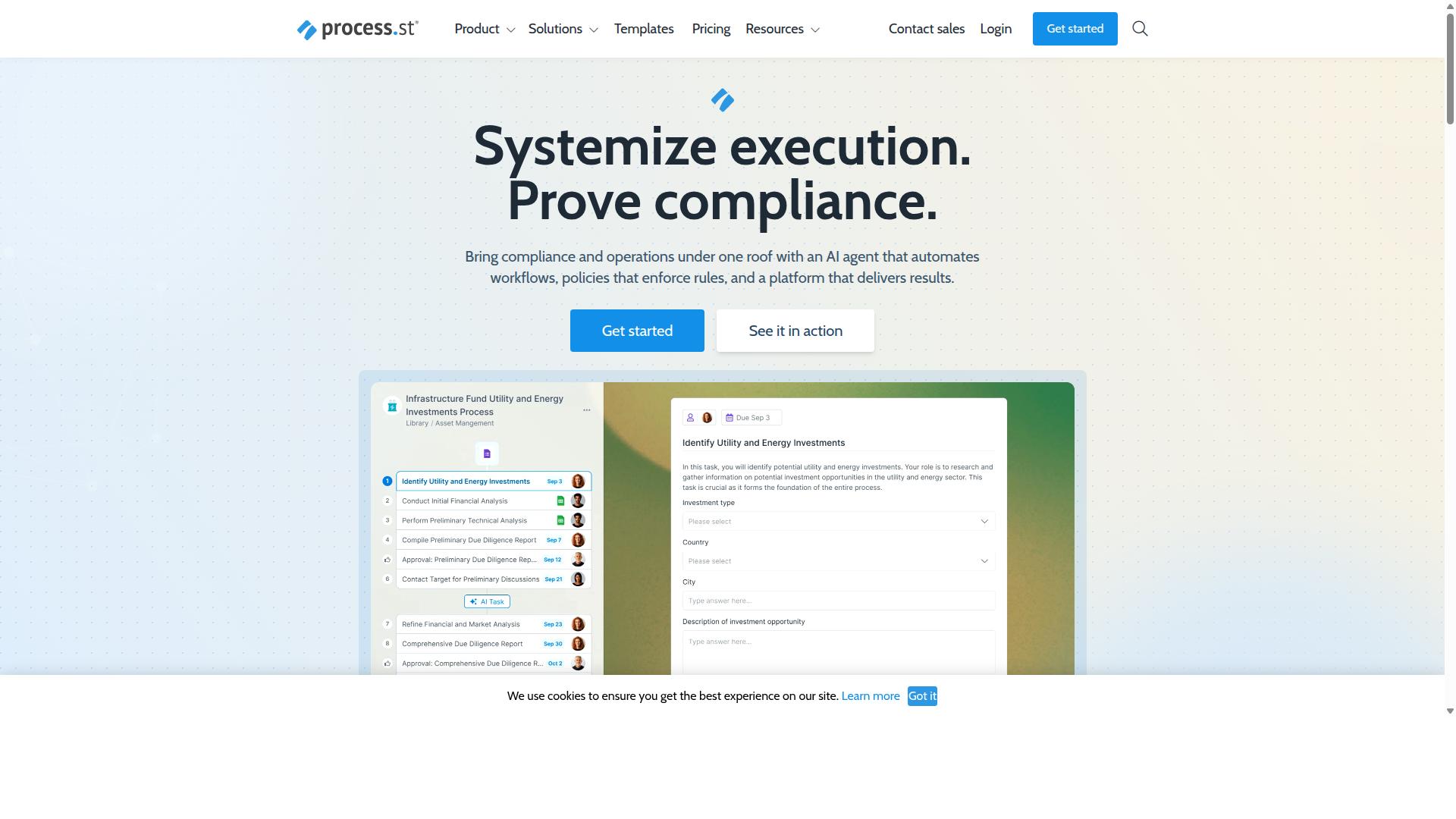
Process Street tops the list because it pairs compliance-grade process automation with the fastest rollout path among the tools reviewed.
The platform combines Docs and Ops products to deliver ISO 9001, SOC 2, and SOX-ready documentation in a single workspace. Teams get audit-ready proof without managing separate systems for document control and workflow execution.
Docs handles policy governance while Ops turns those policies into AI-powered workflows. This unified approach eliminates the back-and-forth between compliance documentation and daily operations.
Organizations across industries use the platform to standardize processes and maintain operational consistency. The result is a single source of truth that meets multiple regulatory requirements simultaneously.
Key Features for Quick Deployment
Deployment happens in minutes, not weeks, thanks to three specific capabilities.
Teams access 1-click import of 75+ compliance templates to start with pre-built processes instead of building from scratch. These templates cover common regulatory and operational needs out of the box.
Conditional logic and AI-driven task assignment auto-configure on first run, adjusting workflows based on conditions without manual setup. The system learns from initial usage patterns to route tasks effectively.
Real-time sync with Salesforce and Slack happens through native connectors that require no API keys. Data flows between systems automatically once the connection is established.
Additional integrations include Zapier, Microsoft Power Automate, Tray.io, Make, and public API access for extended connectivity options.
Pricing and Plans
Three tiers keep cost predictable while scaling from solo founders to global teams.
The Startup plan includes unlimited workflows and tasks with up to 5,000 Data Set records, 5 users, 10 guests, 10 automation apps, and 100 automation actions/month.
The Pro plan includes unlimited workflows and tasks, up to 10,000 Data Set records, custom users/guests, all automation apps, custom automation actions/month, and custom API calls/month.
The Enterprise plan supports custom Data Set records, unlimited Public API access, dedicated Success Manager, priority support, fully-managed workflows, custom integrations, bulk document import, process consulting & health audit, and personalized team training.
2. Scrut Automation
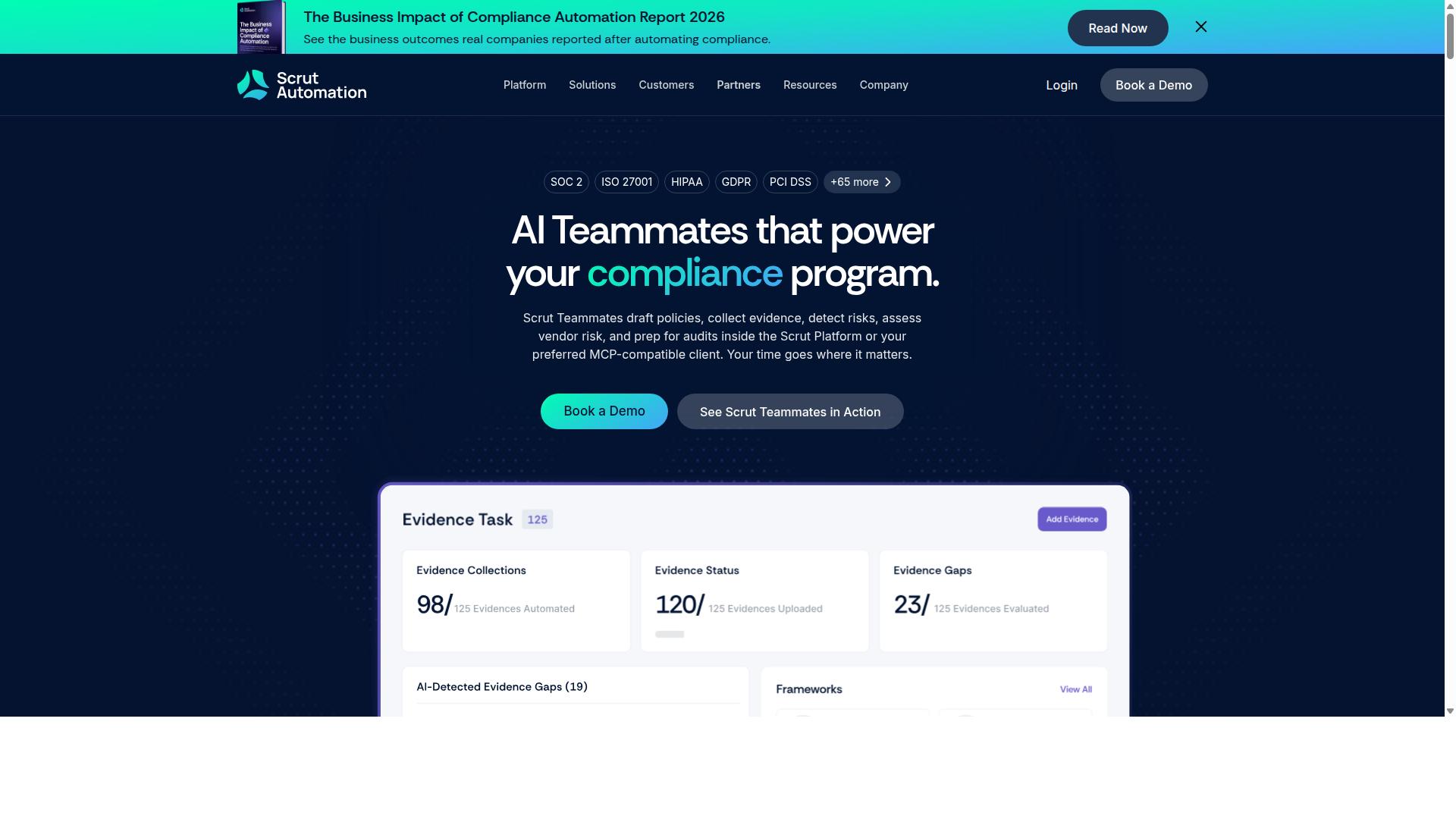
Scrut Automation focuses on lightweight IT and security workflows with a narrower template library than Process Street. The platform emphasizes compliance automation across multiple frameworks. Organizations use it to handle evidence collection and control monitoring without extensive manual input.
Security teams benefit from centralized policy management and risk assessment features. The system connects with existing infrastructure to gather data automatically. Users maintain visibility over assets, privileges, and third-party relationships through a single interface.
Startups and enterprise companies across software, finance, healthcare, and education industries rely on this approach. The solution supports continuous monitoring alongside scheduled assessments. This setup helps teams prepare for audits while reducing repetitive tasks.
Key Features for Quick Deployment
Users can launch core IT workflows in under 15 minutes using its template gallery. The platform provides over 50 security templates that address common compliance requirements. Teams select relevant templates and customize them for specific organizational needs.
Native API connectors connect with major cloud providers including AWS and Azure. These connections enable automatic data collection from infrastructure without manual uploads. The system handles authentication through standard protocols to maintain secure access.
Built-in scheduling options allow teams to set recurring tasks and monitoring intervals. Retry logic manages temporary failures during data collection or API calls. Workflow automation continues without constant oversight when these features operate properly.
Conditional logic helps route information based on specific criteria or thresholds. Error handling captures issues and notifies relevant team members when problems occur. Data mapping ensures information flows correctly between connected systems and internal records.
3. Vanta
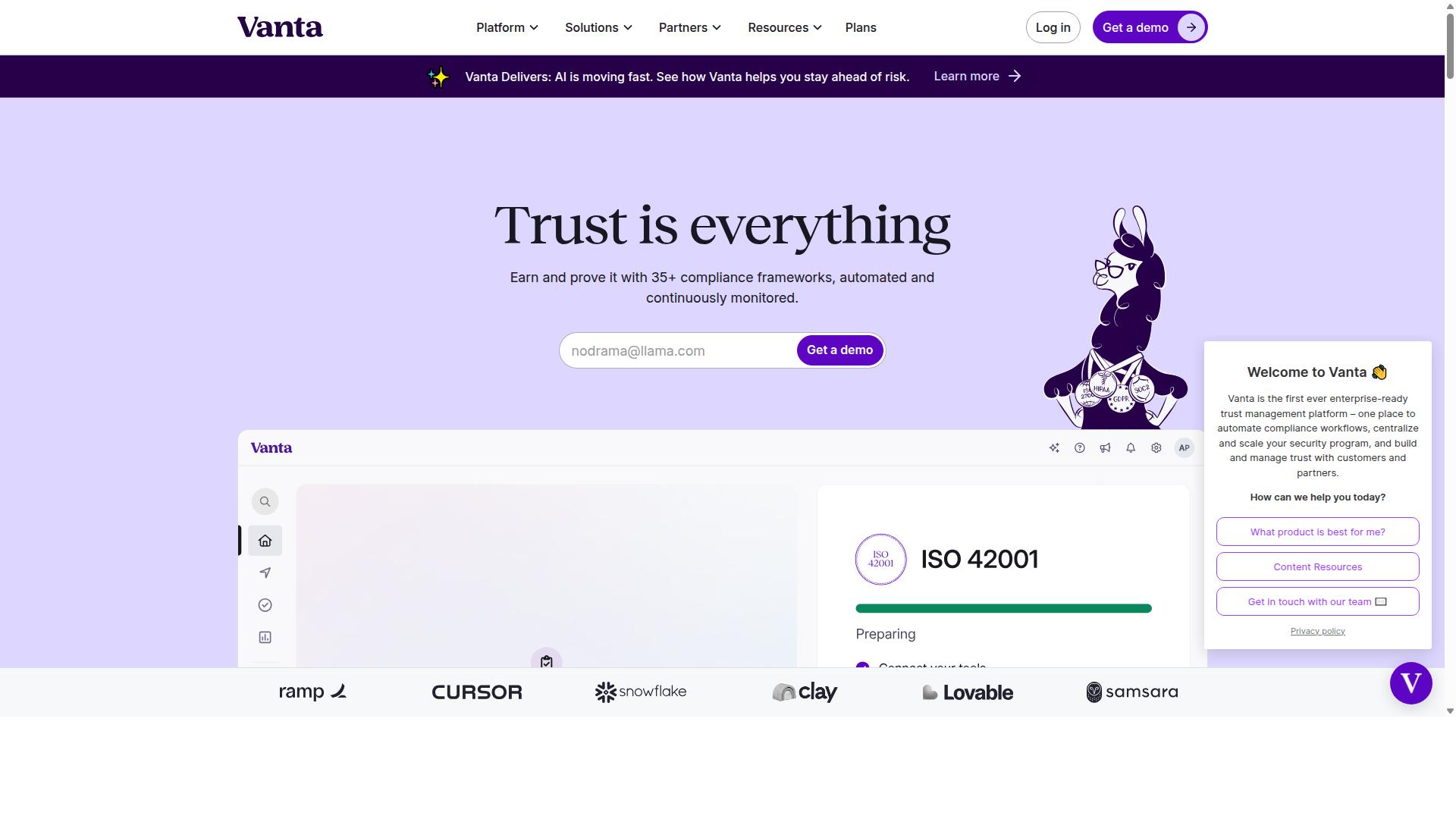
Vanta automates evidence collection for SOC 2 and ISO 27001 but offers fewer native business-process templates.
The platform focuses on compliance monitoring rather than general workflow automation. Teams seeking rapid setup for daily operations may find the feature set narrower than dedicated automation platforms.
Security teams value the audit-ready exports and continuous oversight capabilities. Business users looking for drag-and-drop builders or pre-built templates often need additional tools to handle routine processes.
Key Features for Quick Deployment
Connectors to 200+ cloud apps allow monitoring setup in roughly one hour.
Plug-and-play integrations pull data from cloud services without complex configuration. Real-time alerts notify teams when compliance thresholds change or new risks appear.
Exportable audit logs simplify preparation for external reviews. Security questionnaires receive automated responses from stored evidence, reducing manual data gathering across multiple systems.
Users can connect existing infrastructure quickly through OAuth authentication. The platform handles data mapping automatically for supported services, though custom workflows may require additional configuration steps.
How to Choose the Right Option
The first step is to match the tool to team size, compliance requirements, and integration depth needed.
Operations teams often prioritize pre-built templates and drag-and-drop builder features. Compliance teams focus on audit logs and security compliance capabilities. HR departments look for strong onboarding speed and team collaboration functions.
Finance and IT teams require native connectors and API connectors for their existing systems. Each audience has distinct priorities that shape the right choice.
| Target Audience | Template Count Estimate | Native Connectors | User Limit at Base Tier |
|---|---|---|---|
| Operations | 100+ templates | Zapier, Make, n8n | 5 users |
| Compliance | 50+ templates | Zapier, Make | 10 users |
| HR | 75+ templates | Zapier, n8n | 3 users |
Teams in Operations, Customer management, Compliance, Human resources, Finance, IT and security benefit from platforms designed for workflow automation across Financial services, Real estate, Manufacturing, Healthcare, Professional services, Technology, Capital markets, Property management.
Use cases like Employee onboarding, Client onboarding, ISO compliance, Quality tracking, Document control, Custom workflows show where each tool adds value. The right option depends on your specific industry and use case requirements.
Final Verdict
Process Street delivers the best balance of speed, compliance depth, and scalability for most mid-market teams. Verified users report 30% faster documentation and 75% reduction in setup time when adopting the platform.
SOC 2 Type II and ISO 27001 certifications provide enterprise-grade security standards that many alternatives lack in documented form. These certifications support teams handling sensitive data across regulated industries.
Process Street serves 3,000+ companies and over 1 million users, with 49k+ employees standardized through the platform. The 5-minute average response time and 98% customer rating reflect consistent service quality.
Teams needing HIPAA compliance receive a BAA upon request, while GDPR, CCPA, and AWS CIS requirements receive native support. Data never trains AI models, which addresses privacy concerns that surface in other platforms.
The cloud-based platform available through AWS Marketplace streamlines procurement processes for existing Amazon Web Services customers. This accessibility reduces friction for organizations already invested in AWS infrastructure.